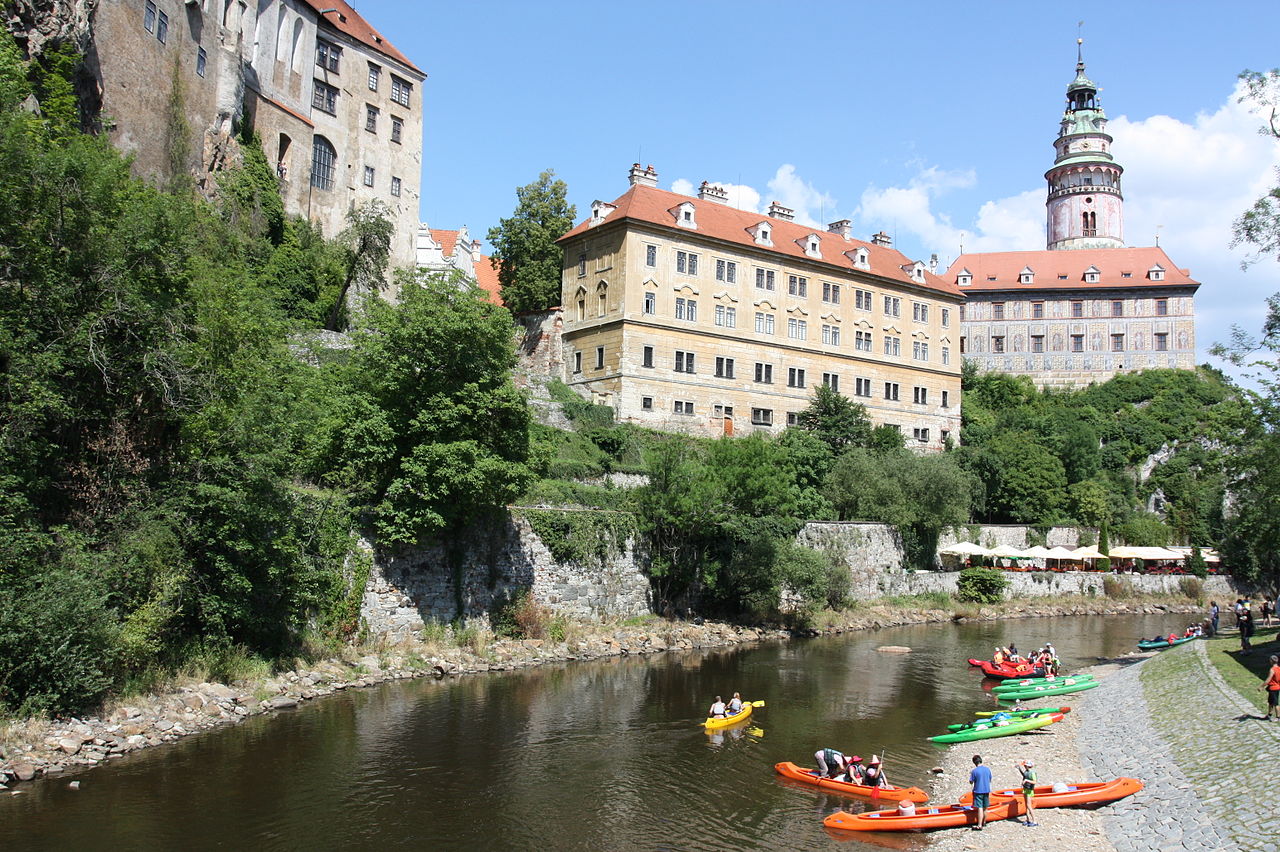
There is a moment when you first see Cesky Krumlov from above — the castle tower rising over the river bend, the orange rooftops packed into the curve of the Vltava, the hills beyond — when it becomes clear why this town has been on the UNESCO World Heritage list since 1992. It looks like something from a painting. The remarkable thing is that it actually looks like that in person too.
What Makes Cesky Krumlov Worth the Trip
The town is small — you can walk from one end to the other in about twenty minutes. This is part of its appeal. Unlike Prague, which can feel overwhelming in its scale and crowds, Cesky Krumlov is comprehensible. You can see most of what matters in a day and a half, and the experience of simply wandering the cobbled streets without a specific destination is one of the best things about being here.
The castle is the obvious starting point. It is the second-largest castle complex in the Czech Republic after Prague Castle, and it has been remarkably well preserved. The guided tours take you through rooms that have barely changed since the 18th century, including a Baroque theater that is one of the best-preserved examples of its kind in Europe.
The Castle and Its Grounds
The castle complex consists of several courtyards connected by bridges and passageways. The round tower — the one visible from almost everywhere in town — dates from the 13th century and can be climbed for a view that puts the whole town into perspective. The bears in the castle moat, a tradition maintained since the 17th century, are an unexpected detail that visitors either find charming or slightly strange.
The castle gardens above the complex are often overlooked by visitors who focus on the interior tours. They are worth the walk up. Formal Baroque gardens give way to a more naturalistic landscape, and the views back down over the town are excellent. In summer, the open-air theater in the gardens hosts performances — check the schedule before you visit if this interests you.
The Old Town
The historic center occupies the peninsula formed by the river bend. The main square, Namesti Svornosti, is surrounded by Renaissance and Baroque facades and anchored by a plague column from 1715. The streets leading off the square are where the town reveals itself gradually — small courtyards, artisan workshops, and the occasional view down to the river.
The Church of St. Vitus, different from its Prague namesake but equally impressive at this scale, stands at the edge of the old town. Its Gothic interior is relatively plain but the building itself is striking, particularly when seen from the castle bridge above.
Getting There and Getting Around
Cesky Krumlov is about 170 kilometers south of Prague. By train, the journey takes approximately three hours with a change at Ceske Budejovice. Direct buses from Prague's Florenc bus terminal are faster — around two and a half hours — and run several times daily. The bus is generally the more convenient option.
Once you are in town, everything is walkable. The historic center is largely pedestrianized, and the castle is a short uphill walk from the main square. There is no need for any transport within the town itself.
Where to Stay
Staying overnight makes a significant difference. The day-trip crowds leave in the late afternoon, and the town in the evening — lit by streetlamps, the castle illuminated above — has a completely different character. There are several good guesthouses within the old town walls, though they book up quickly during summer weekends. Accommodation just outside the historic center is often better value and only a few minutes' walk from everything.
Practical Information
- Distance from Prague: 170 km (approx. 2.5 hours by bus)
- Best time to visit: May-June and September-October
- Castle tours: Book in advance during summer
- Crowds: Heaviest July-August; mornings are always quieter